Most people spend a sunset staring west. They watch the light drop, the colors shift, the sun slip below the horizon, then pack up and leave. What they miss is directly behind them: a pale arch of rose and pink sitting above a dark grey shadow that rises slowly off the eastern horizon, one of the most geometrically precise optical phenomena the sky produces. It has a name - the Belt of Venus - and it appears at nearly every clear twilight, on every continent, as long as you know to look for it and when.
The Counterintuitive Instruction: Turn Your Back on the Sunset
There is something genuinely difficult about turning away from a sunset. The western sky is loud - orange and red and gold, the whole event compressed into a narrow stripe above the horizon. Everything about the moment pulls your attention there. Turning your back feels wrong, like leaving a concert during the main set.
But this is exactly what seeing the Belt of Venus requires. You need to face the direction directly opposite the sun - east at sunset, west at sunrise - and look toward what appears, at first glance, to be nothing: the ordinary, darkening sky. Give it thirty seconds. Let your eyes adjust. A band of pink will resolve itself above the horizon, perhaps 10 to 20 degrees up, and below it a distinctly darker, bluish-grey shadow band will be lifting off the ground.
The mindfulness angle here is real. Sunsets work on autopilot. You point a camera at the obvious color, shoot until the light fades, and check your phone. Looking away from that requires a small but deliberate act - a conscious redirect of attention toward something quieter and less immediately obvious. Photographers who develop the habit of turning around at every twilight find they miss fewer things in general, because the act of deliberately checking the less-obvious direction becomes a practice, not just a tip they once read.
What You're Actually Seeing: Earth's Shadow and the Pink Arch
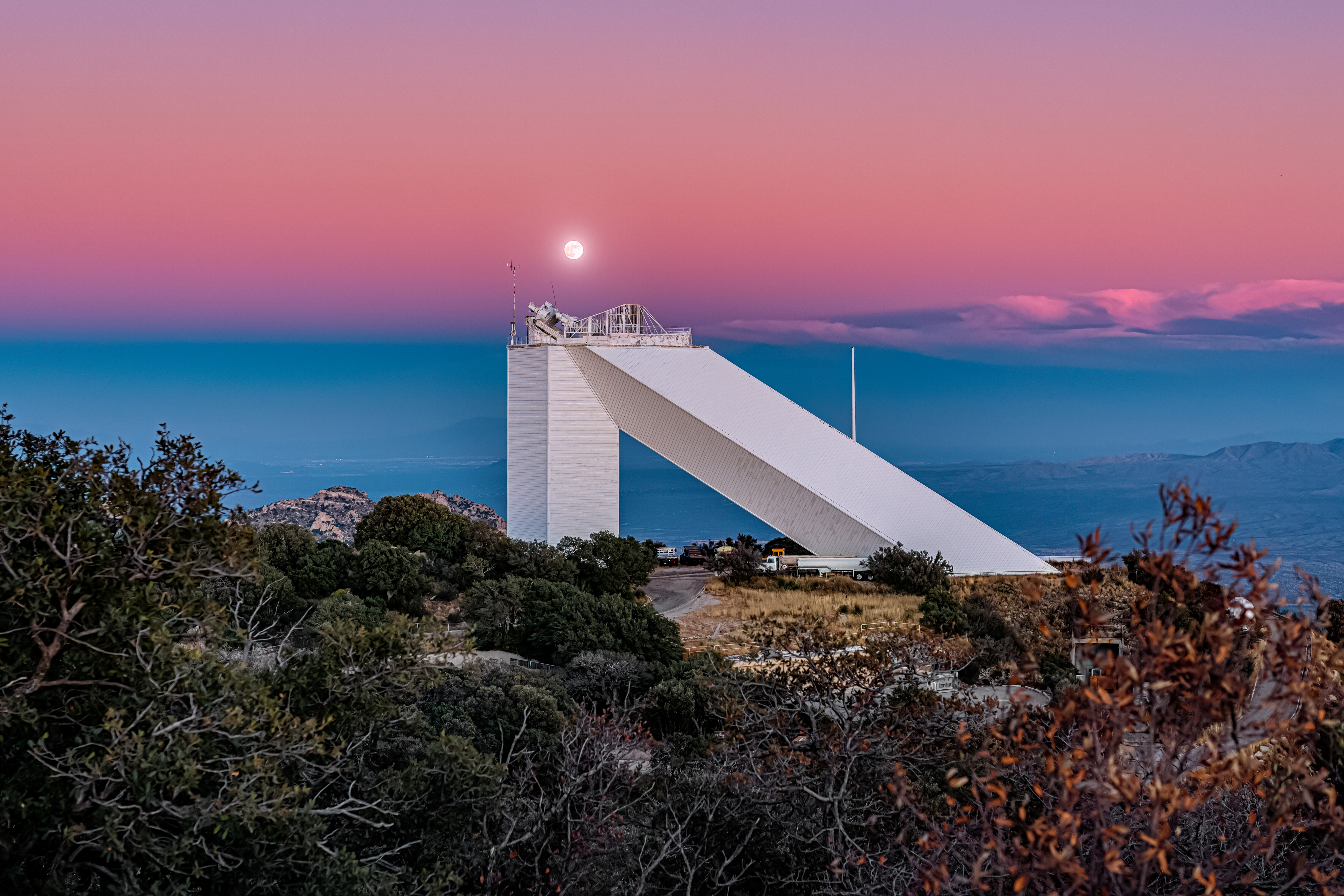
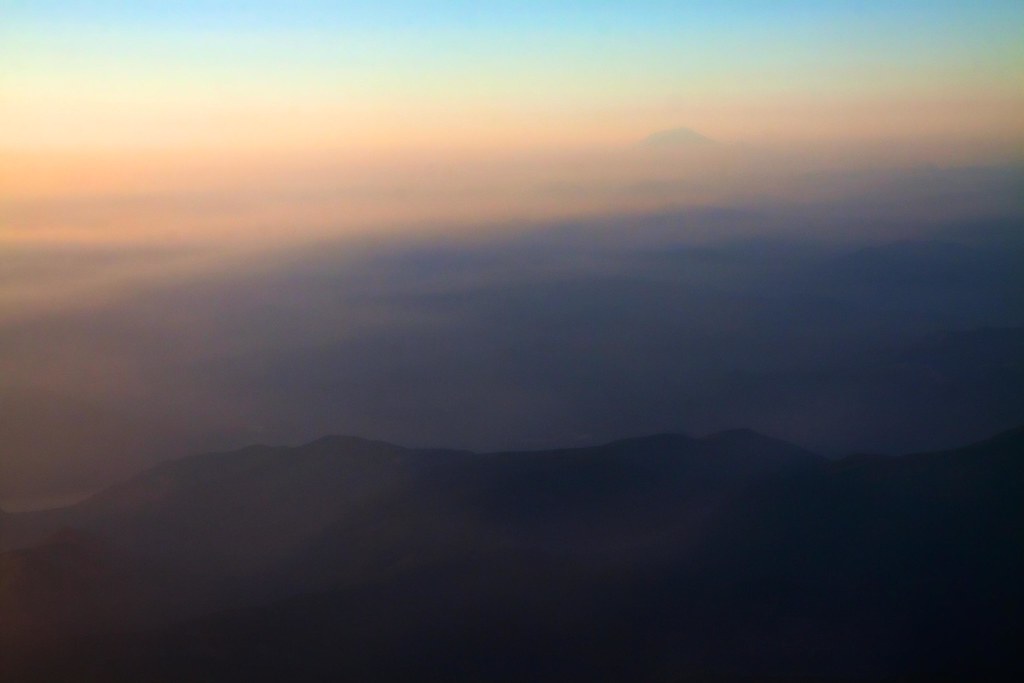
The Belt of Venus is a broad, pinkish-to-rose colored band that sits roughly 10 to 20 degrees above the antisolar horizon - the point directly opposite the sun. Immediately below it is a darker band, blue-grey and distinct, called Earth's shadow, or sometimes the twilight wedge. These two bands form a single system: the shadow below, the illuminated atmosphere above, with the pink arch marking the boundary between them.
Earth's shadow is exactly what the name says. The solid Earth is blocking the sun from reaching that part of the atmosphere, and the shadow projects outward into the sky on the far side. At the moment of sunset, you can see this shadow rising off the eastern horizon as the sun descends on the other side. Over roughly 10 to 20 minutes, as the sun continues dropping, the shadow band climbs higher. Watch it long enough and it eventually merges indistinguishably with the uniformly darkening sky overhead, at which point the show is over.
The geometry wraps all the way around. The Belt of Venus is technically visible along the full 360 degrees of the horizon, not just in the east. If you spin slowly and look carefully, you'll see the pinkish fringe riding along all sides. It's most intense and easiest to photograph directly at the antisolar point, because that's where the geometry concentrates the effect, but observers who look only east and then give up will miss the softer version visible to the north and south as well. On exceptional evenings, the entire horizon glows with it.
The name comes from Roman mythology, not the planet. Ancient observers likened the pink arch stretched across the sky to the girdle or belt traditionally worn by Venus, goddess of love and beauty - a mythological accessory said to inspire desire in mortals and immortals alike. Scientists also call it the antitwilight arch or anti-solar arch - names that describe the geometry rather than the aesthetics.
The Science: Backscattered Reddened Light and Why the Arch Is Pink
To understand why the arch is pink, you need two ideas working together: Rayleigh scattering and backscattering.
Rayleigh scattering is why the sky is blue during the day and red at sunset. Shorter wavelengths - blue, violet - scatter more readily off gas molecules, spreading in all directions and giving the daytime sky its color. Longer wavelengths - red, orange - scatter less and travel further through the atmosphere in roughly their original direction. At sunset, sunlight travels through a much longer horizontal column of atmosphere before reaching the observer, so most of the blue has already scattered away. What remains is red and orange - the familiar sunset palette.
Now apply that to the Belt of Venus. Sunlight strikes the lower atmosphere on the western horizon, travels a long path through it, and gains red and orange tones along the way. That reddened light then hits airborne particles - dust, aerosols, fine haze - and scatters backward toward an observer on the opposite side of the sky. The observer looks east and receives the same reddened wavelengths, arriving from the reverse direction. The result is a pink arch that carries the same color logic as the sunset but delivered through backscattering rather than direct illumination. The arch sits where it does because it marks the upper edge of the still-lit atmosphere, just above the line where Earth's shadow begins below.
Why Your Camera Reveals What Your Eyes Miss: The Purkinje Effect
Here is what trips up first-time Belt of Venus observers: they go out, look east, see something vaguely pinkish and underwhelming, then glance at their camera screen and find a vivid magenta band they could barely detect with their own eyes. This gap is not camera processing. It has a specific physiological cause.
During civil twilight, the light level drops fast. The human visual system responds by transitioning from photopic vision - cone-based, tuned to peak sensitivity around 555 nanometers, in the yellow-green range - toward scotopic vision, which is rod-based and peaks closer to 507 nanometers, in the blue-green range. This shift is called the Purkinje effect, and it means that at exactly the light levels when the Belt of Venus appears, your eyes are losing sensitivity to the red and pink wavelengths that make up the arch. Reds go relatively dim. Blues and greens hold their apparent brightness longer.
Camera sensors don't do this. They maintain consistent red-channel sensitivity across the range of light levels that civil twilight produces. The camera records a pink arch that your visual system has, in effect, partially switched off. This is not a saturation slider or a processing artifact. The color is there - your eyes are just becoming less able to detect it as the sky darkens.
Two practical consequences follow. First, trust your camera preview over your naked-eye impression when deciding whether the arch is worth shooting. If your screen shows it, shoot it even if it looks faint to you directly. Second, check your shots on the camera screen immediately after capture, in the field, rather than waiting until you're indoors. If the screen shows the pink arch, you're in the shooting window and should keep working. If it shows a uniform grey, conditions are not cooperating or the window has already passed.
Reading the Conditions: Aerosols, Smoke, Altitude, and What to Forecast
The Belt of Venus is not equally vivid every evening. A clean, crystalline, low-humidity sky often produces almost no visible arch at all. Paradoxically, a touch of atmospheric loading - thin haze, distant wildfire smoke, fine dust, moderate pollution particles - can make the display far more striking, because these aerosols are the backscattering agents that redirect the reddened light toward the observer. More particles means more backscattering, which means a brighter, more saturated arch.
The tradeoff is steep at the dirty end. Thick smoke or dense haze blocks light rather than scattering it, and a heavily smoky sky produces nothing. The productive range is moderate aerosol loading - the kind of thin, diffuse haze that gives distant hills a soft focus and makes the western horizon glow orange well before sunset. That atmospheric state consistently produces the most photogenic Belt of Venus.
After major volcanic eruptions that inject sulfur dioxide into the stratosphere - events like Pinatubo in 1991 or Raikoke in 2019 - the stratospheric aerosol layer thickens significantly. Twilight optical phenomena including the Belt of Venus can be noticeably enhanced for months or longer as those stratospheric sulfate aerosols slowly disperse. When an eruption has occurred, it is worth paying extra attention to twilight skies in the weeks and months that follow.
Altitude helps for different reasons. Shooting from a mountain ridge or elevated plateau puts you above much of the low-level haze and pollution that blurs the shadow band's upper edge at sea level. From high ground, the line between Earth's shadow and the pink arch is crisper and photographs more cleanly. Observers at lower elevations often find the shadow-arch boundary smeared into a gradual gradient rather than a distinct line.
To forecast a promising evening, watch for air quality index readings in the moderate range, or look for days following a dry wind from an inland direction. The orange glow on a hazy western horizon before sunset is a reliable omen for what will appear behind you once the sun is down.
Timing the Window: Civil Twilight, Peak Contrast, and the Fade
Civil twilight runs from the moment the sun touches the horizon to when it reaches 6 degrees below it - a phase whose length varies considerably with latitude and season: roughly 20 to 24 minutes near the equator, 30 to 40 minutes or more at mid-latitudes, and well over an hour at high latitudes around the solstices. The usable Belt of Venus window within that period is shorter regardless of location.
The arch and shadow band are most photogenic roughly 4 to 10 minutes after sunset, when the contrast between the dark shadow below and the pink arch above it is greatest. Before that moment, the shadow band has barely lifted and the arch is thin. After it, the sky darkens uniformly and both elements fade toward grey before becoming indistinguishable. The window closes faster than most photographers expect.
Set up and be ready before the sun sets. The moment the sun touches the horizon, turn east and start shooting. The shadow band will already be a thin line at the base of the sky. Over the next several minutes, watch it climb while the pink arch thickens above it. The peak contrast moment passes quickly. At around 10 minutes post-sunset, the gradient begins softening noticeably. By 20 minutes, what remains is subtle at best and requires longer exposures that begin to blur any movement in the scene.
Before sunrise, the sequence runs in reverse. The arch and shadow appear in the west before the sun comes up, with the shadow descending toward the horizon as sunrise approaches. Start looking 15 to 20 minutes before the listed sunrise time, point your camera west, and track the shadow downward as the pink fades just before first light washes it out.
Camera Settings and Technique
The Belt of Venus is a low-contrast, wide-gradient subject. It does not reward the same approach as dramatic cloud formations or fast-moving light. The technical goal is accurate color rendition across a subtle tonal range.
- ISO: Start at 200 to 400. This keeps noise low while giving you workable shutter speeds. Push higher only if the light demands it and you're willing to accept some luminance noise in what is already a soft gradient.
- Aperture: f/8 to f/11 keeps the full sky sharp and avoids the subtle color cast that some lenses introduce wide open. The Belt of Venus is not a subject where depth-of-field pressure exists - close it down and get clean optics.
- Shutter speed: Begin around 1/25 of a second as the sun sets, and lengthen progressively as the sky darkens - toward a half-second or beyond in the final minutes of the window. A tripod is not optional here.
- White balance: Set a fixed value around 4000K. Auto white balance shifts toward blue as ambient light drops, actively suppressing the pink wavelengths you're trying to record. A warmer fixed setting renders the arch's color accurately. Shooting JPEG with auto white balance can effectively erase the phenomenon from your files.
- File format: RAW. The Belt of Venus lives in the space between subtle pink and neutral grey. RAW files give you the recovery latitude to pull out the color gradient in post without introducing banding artifacts. In editing, work the magenta and red channels carefully - you'll find more color than the camera screen suggested.
- Bracket exposures: Shoot the same composition at two or three different exposures. The shadow band and the sky above the arch occupy different tonal values, and one exposure that preserves the pink arch may clip the brighter sky or lose shadow detail. Bracketing gives you choices.
Composition Strategies: Framing an Abstract Gradient
The Belt of Venus presents a compositional problem most photographers are not accustomed to. It is a horizontal gradient - no single point of peak interest, no clear subject, no hard edge in the conventional sense. A featureless pink sky needs something to give the gradient meaning and scale.
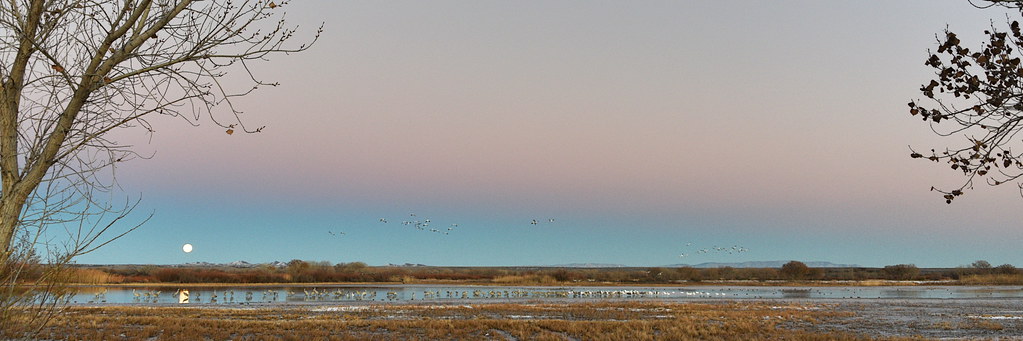
Water is the most effective foreground. A still lake, wet tidal flat, or flooded field mirrors the arch and often returns it more saturated in the reflection than in the sky above - a function of viewing angle and polarization. The reflection doubles the visual weight of what would otherwise be a wide, abstract band. Shoot low, include as much water surface as the composition allows, and place the horizon line off-center to give roughly equal weight to sky and reflection.
Focal length changes what the image is about. A wide-angle lens in the 16 to 24mm equivalent range captures the full sweep of the arch across most of the sky, showing its scale and the way it wraps around the horizon. This works well when the arch is bright and the shadow band is clearly defined. A telephoto in the 85 to 200mm range isolates the boundary between shadow and arch, compressing the gradient into a more graphic image - a dark band at the bottom of the frame, a thin pink stripe, then the darkening sky above. On evenings when the dividing line is crisp and clean, this compression produces near-abstract results that read immediately.
Silhouettes give the gradient context. A tree line, a ridge, a pier, or a single figure facing east provides a scale reference and anchors the composition to a specific place. Without something along the horizon, Belt of Venus images can look like post-processing experiments. Include the ground.
One counterintuitive framing choice: place the shadow band as the dominant element rather than the pink arch above it. The dark, rising band is the more unusual element - a visible shadow cast by the entire planet - and making it the lower two-thirds of the frame, with just a stripe of pink and sky above, produces an image that makes viewers stop and ask questions. That question is what you want.
A flat or uninspiring western sky does not rule out a photogenic Belt of Venus. The aerosol loading that backscatters reddened light eastward does not always produce a dramatic direct sunset - moderate haze can generate a vivid arch even when the western light is dull and overcast. Checking east regardless of what the sunset is doing turns the antisolar direction from afterthought into genuine backup shot.